
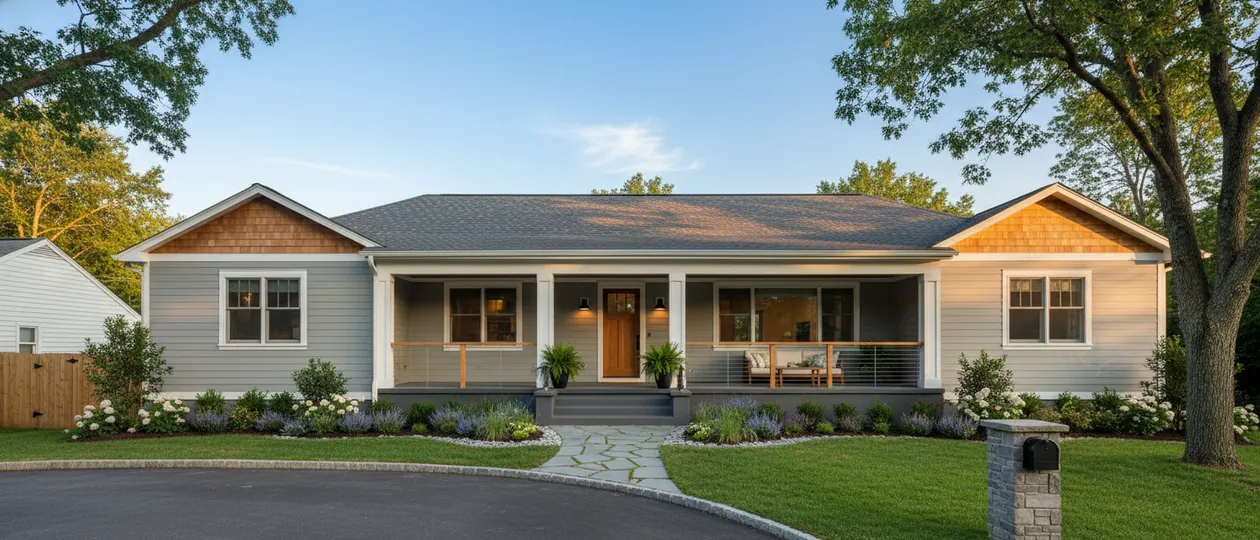
Ask any contractor “how much will this cost?” and they’ll tell you: “it depends.” That answer is frustrating but honest. Renovation costs in the US vary dramatically depending on your state, your city, the age and condition of your home, and the quality of materials and finishes you choose.
This guide gives you realistic cost ranges for 2026, broken down by room type, project scope, and material tier. Use it to set a budget you can trust before talking to contractors, and to evaluate whether the quotations you receive are reasonable.
All figures are in US dollars and represent national averages. Regional adjustments are covered in a dedicated section below, because a kitchen renovation in Manhattan and a kitchen renovation in rural Alabama are very different price propositions.
Understanding what you’re paying for
Renovation costs break down into a few key categories. Understanding these helps you read quotes more critically and budget more accurately.
Labour costs
Labour accounts for 35-55% of most renovation budgets, depending on the complexity of the work and your location. Skilled trades in high-demand markets command premium rates.
Typical hourly rates for US tradespeople in 2026:
| Trade | National average range | High-cost markets (NYC, SF, LA, Boston) |
|---|---|---|
| General carpenter | $45-$75/hr | $75-$120/hr |
| Electrician | $60-$100/hr | $100-$160/hr |
| Plumber | $55-$95/hr | $95-$150/hr |
| Tile installer | $45-$75/hr | $70-$110/hr |
| Painter | $35-$60/hr | $55-$90/hr |
| HVAC technician | $60-$100/hr | $95-$150/hr |
| Drywall installer | $40-$65/hr | $65-$100/hr |
| Flooring installer | $40-$70/hr | $65-$100/hr |
| Roofer | $50-$80/hr | $75-$120/hr |
When you hire a general contractor (GC), these labour costs are built into the GC’s overall price along with their overhead and profit margin (typically 15-25%). You won’t see hourly breakdowns for individual trades — instead, the GC provides a total price for the project or for each phase.
Material costs
Materials typically account for 30-45% of the budget, but this swings wildly based on your choices. The range between builder-grade and premium materials can be 4-6x for the same category of item. A laminate countertop costs $15-$40 per square foot installed; a natural quartzite slab costs $100-$200+ per square foot installed.
Professional fees
Budget 8-15% for professional fees:
- Architect: 8-15% of construction cost for full service, or $2,000-$8,000 for drawings only
- Structural engineer: $500-$2,000 per assessment
- Building permit fees: $200-$2,000+ depending on jurisdiction and project scope
- Interior designer: $100-$300/hr or 10-20% of furniture/fixture budget
- Surveyor (for boundary or structural): $400-$1,200
Contingency
Budget 10-20% on top of your estimated costs for the unexpected. Older homes (pre-1970) should lean towards 20%. Common surprises include:
- Outdated or unsafe electrical wiring (knob-and-tube, aluminum)
- Plumbing issues (galvanized steel pipes, polybutylene, hidden leaks)
- Asbestos in flooring, insulation, or popcorn ceilings
- Termite or water damage hidden behind walls
- Code violations from previous unpermitted work
- Foundation issues revealed during demolition
Kitchen renovation costs
Kitchens are the most expensive rooms to renovate per square foot, and they’re where Americans spend the most on home improvement.
Costs by scope
| Scope | Typical cost range | What’s included |
|---|---|---|
| Cosmetic refresh | $8,000-$20,000 | Reface or paint cabinets, new countertops, new hardware, new backsplash, updated lighting |
| Mid-range remodel | $25,000-$60,000 | New semi-custom cabinets, new countertops, new appliances, new flooring, minor plumbing/electrical |
| Full renovation | $60,000-$120,000 | Complete gut, new layout, structural work, full electrical and plumbing, premium materials |
| Premium/luxury | $120,000-$200,000+ | Custom cabinetry, natural stone throughout, professional-grade appliances, structural remodel |
Key material costs
| Item | Builder-grade | Mid-range | Premium |
|---|---|---|---|
| Cabinets (typical 10x10 kitchen) | $3,000-$8,000 | $8,000-$20,000 | $20,000-$60,000+ |
| Countertops (per sq ft installed) | $15-$40 (laminate) | $50-$100 (quartz) | $100-$250+ (natural stone) |
| Appliance package | $3,000-$6,000 | $6,000-$15,000 | $15,000-$40,000+ |
| Flooring (per sq ft installed) | $3-$7 (vinyl) | $7-$14 (porcelain/engineered) | $14-$30+ (natural stone/hardwood) |
| Backsplash (per sq ft installed) | $5-$15 (basic ceramic) | $15-$30 (subway/porcelain) | $30-$80+ (natural stone/glass) |
For more detail on kitchen renovation planning, see our kitchen renovation guide.
The “10x10 kitchen” benchmark
The US kitchen industry often uses a “10x10 kitchen” (10 feet by 10 feet, or 100 square feet) as a standard benchmark for comparing cabinet and installation costs. Your actual kitchen may be larger or smaller, but the 10x10 figure gives you a per-unit reference point.
Bathroom renovation costs
Costs by scope
| Scope | Typical cost range | What’s included |
|---|---|---|
| Cosmetic refresh | $3,000-$8,000 | New fixtures (faucets, showerhead), paint, accessories, new mirror/lighting |
| Mid-range remodel | $15,000-$35,000 | New vanity, new toilet, new tub/shower, new tile, new flooring, minor plumbing changes |
| Full renovation | $35,000-$65,000 | Complete gut, layout change, move plumbing, full tile, heated floors, premium fixtures |
| Premium/luxury | $65,000-$100,000+ | Walk-in shower with frameless glass, freestanding tub, custom vanity, natural stone, radiant floor |
Key material costs
| Item | Builder-grade | Mid-range | Premium |
|---|---|---|---|
| Vanity with top (36”-48”) | $300-$800 | $800-$2,500 | $2,500-$8,000+ |
| Toilet | $150-$350 | $350-$800 | $800-$3,000+ |
| Tub | $300-$700 | $700-$2,000 | $2,000-$8,000+ |
| Shower enclosure (glass) | $500-$1,200 | $1,200-$3,000 | $3,000-$8,000+ |
| Floor tile (per sq ft installed) | $5-$10 | $10-$20 | $20-$50+ |
| Wall tile (per sq ft installed) | $5-$12 | $12-$25 | $25-$60+ |
For more detail on bathroom planning, see our bathroom renovation guide.
Living room, bedroom, and common area costs
Rooms without plumbing are significantly less expensive to renovate.
Costs per square foot
| Scope | Cost per sq ft | Typical room total (150 sq ft) |
|---|---|---|
| Cosmetic refresh (paint, new carpet) | $5-$12 | $750-$1,800 |
| Mid-range update (new flooring, lighting, drywall repair, paint) | $12-$30 | $1,800-$4,500 |
| Full renovation (new windows, rewire, new drywall, new flooring, new HVAC) | $30-$60 | $4,500-$9,000 |
Common cost line items
- Hardwood flooring (supply and install): $8-$16 per sq ft
- Engineered hardwood (supply and install): $6-$14 per sq ft
- Carpet (supply and install): $3-$8 per sq ft
- Interior doors (supply and install): $200-$600 each
- Baseboard trim (supply and install): $4-$10 per linear foot
- Crown molding (supply and install): $6-$16 per linear foot
- Recessed lighting (per fixture, supply and install): $150-$350
Whole house renovation costs
For a comprehensive renovation — where you’re touching every room and every system — costs are best understood per square foot.
Cost per square foot by level of finish
| Level | Cost per sq ft | 1,200 sq ft home | 1,800 sq ft home | 2,500 sq ft home |
|---|---|---|---|---|
| Basic (livable, clean, functional) | $75-$120 | $90,000-$144,000 | $135,000-$216,000 | $187,500-$300,000 |
| Mid-range (good quality finishes) | $120-$200 | $144,000-$240,000 | $216,000-$360,000 | $300,000-$500,000 |
| Premium (high-end finishes) | $200-$350 | $240,000-$420,000 | $360,000-$630,000 | $500,000-$875,000 |
| Luxury | $350+ | $420,000+ | $630,000+ | $875,000+ |
These figures include all labour and materials for a complete renovation: new kitchen, new bathrooms, full electrical update, new plumbing, new HVAC, drywall, flooring, paint, and fixtures. They exclude:
- Additions or structural expansions
- Foundation repair
- Roof replacement
- New windows (exterior)
- Professional fees
- Furniture and standalone appliances
- Contingency
What a “whole house renovation” typically includes
- Electrical update (new panel, new wiring, new outlets and switches throughout)
- Plumbing update (new supply lines, drain lines as needed, new fixtures)
- HVAC update or replacement
- New drywall or drywall repair throughout
- New kitchen and bathroom(s)
- New flooring throughout
- New interior doors and trim
- Full paint job
- New lighting throughout
Structural work costs
Structural modifications are a major cost driver. Here are typical ranges:
| Work | Typical cost |
|---|---|
| Load-bearing wall removal with beam (single residential span) | $2,500-$10,000 |
| New window or door opening in exterior wall | $2,500-$8,000 |
| Foundation repair (pier and beam, per pier) | $1,000-$3,000 |
| Foundation repair (slab, per section) | $3,000-$7,000 |
| Basement waterproofing (interior) | $3,000-$10,000 |
| Room addition (per sq ft) | $150-$350 |
| Second-story addition (per sq ft) | $200-$400 |
Structural engineer fees are separate: $500-$2,000 for a standard residential assessment.
Regional price variations
The US has enormous regional cost variation — more so than most countries due to differences in labour markets, material costs, building codes, and cost of living.
Regional cost multipliers (approximate)
Use the national averages in this guide as a baseline, then adjust:
| Region | Multiplier | Key factors |
|---|---|---|
| New York City (Manhattan, Brooklyn) | 1.5x-2.0x | Extreme labour costs, access challenges, co-op/condo board requirements |
| San Francisco Bay Area | 1.4x-1.8x | High labour costs, strict permitting, seismic requirements |
| Los Angeles | 1.2x-1.5x | High demand, seismic requirements, permit complexity |
| Boston / Washington DC | 1.2x-1.5x | High labour costs, historic district requirements |
| Seattle / Portland | 1.1x-1.3x | Above average labour, energy code requirements |
| Chicago / Minneapolis | 1.0x-1.2x | Close to national average, cold-weather construction challenges |
| Denver / Phoenix | 1.0x-1.15x | Growing markets, moderate costs |
| Atlanta / Charlotte / Nashville | 0.9x-1.1x | Around or slightly below national average |
| Dallas / Houston | 0.85x-1.05x | Generally below national average, high availability |
| Midwest (rural) | 0.75x-0.9x | Lower labour costs, but fewer available trades |
| Southeast (rural) | 0.7x-0.9x | Lowest labour costs, but limited specialist availability |
Why costs vary so much
- Labour market — in cities like NYC and San Francisco, skilled tradespeople earn 2-3x what their counterparts earn in rural areas. This is the single biggest cost driver.
- Permitting — some jurisdictions have complex, slow, and expensive permitting processes that add both time and money. Others are straightforward.
- Building codes — seismic zones (California, Pacific Northwest) require additional structural work. Hurricane zones (Florida, Gulf Coast) require wind-rated construction. Cold-climate zones require higher insulation levels.
- Access and logistics — renovating a Manhattan apartment means elevator booking, building rules, working hour restrictions, and no storage space. Renovating a suburban house with a driveway and garage is fundamentally simpler.
- Material transport — remote areas pay more for materials due to shipping costs.
Material price tiers: where to invest and where to save
Smart budgeting means spending more on the things that matter daily and saving on the things that don’t.
Invest in quality here
- Countertops — you use these every day. Quality quartz or natural stone lasts decades and resists damage. Cheap laminate stains and chips.
- Plumbing fixtures — faucets, shower valves, and toilet internals get used thousands of times a year. Cheap ones fail early and cost more to replace than to buy quality upfront.
- Kitchen cabinets — specifically the hardware (hinges, drawer slides). Soft-close mechanisms and quality slides are worth the upgrade. The doors can be simple, but the mechanics matter.
- Flooring in high-traffic areas — kitchens, entryways, and hallways. Buy once, buy well.
- Windows — energy-efficient windows pay for themselves over time and dramatically improve comfort.
Save here without sacrificing quality
- Interior doors — a solid-core flat-panel door at $150 looks nearly identical to a $500 door when painted
- Trim and baseboard — MDF or primed finger-joint pine are a fraction of the cost of solid hardwood and look the same painted
- Cabinet hardware — knobs and pulls are cheap to upgrade later if your taste changes
- Light fixtures — enormous selection at every price point. A $30 fixture often looks as good as a $300 one
- Paint — mid-range paint from major brands (Benjamin Moore Regal, Sherwin-Williams SuperPaint) covers well and lasts. You don’t need the ultra-premium line
Permits and their costs
Building permits are required for most renovation work that involves structural, electrical, plumbing, or HVAC changes. Permit costs vary by jurisdiction:
| Permit type | Typical cost range |
|---|---|
| General building permit (based on project value) | $200-$2,000+ (often 1-2% of project value) |
| Electrical permit | $50-$500 |
| Plumbing permit | $50-$500 |
| Mechanical (HVAC) permit | $50-$500 |
| Demolition permit | $100-$500 |
Some jurisdictions charge a flat fee; others charge as a percentage of the project’s declared value. Your general contractor typically handles permit applications and includes the fees in their quote, but confirm this explicitly.
The cost of skipping permits
Unpermitted work creates serious problems:
- Home insurance may not cover damage related to unpermitted work
- When you sell, a home inspection or title search may reveal the work, and buyers can demand it be permitted retroactively (or walk away)
- Retroactive permits cost more and may require opening up finished walls for inspection
- Safety risk — permits exist to ensure work meets code requirements for electrical, structural, and fire safety
Always get the proper permits. Read our home renovation planning guide for more on navigating the permit process.
How to use these costs for budgeting
Step 1: Define your scope
List every room you’re renovating and what work is happening in each. Be specific — “renovate the bathroom” isn’t a scope; “gut the bathroom, new tile shower with glass enclosure, new vanity, new toilet, heated floors” is a scope of work.
Step 2: Estimate using the tables above
Add up cost ranges for each room and item. Use the mid-point for your working estimate.
Step 3: Apply your regional multiplier
Adjust for your location using the regional table.
Step 4: Add professional fees (10-15%)
Architect, engineer, permits, inspections.
Step 5: Add contingency (10-20%)
More for older homes, less for newer ones.
A worked example
Project: Full renovation of a 1,500 sq ft ranch house in the Atlanta metro area. New kitchen, two new bathrooms, full electrical update, new HVAC, new flooring throughout, full interior paint.
| Item | Estimated cost |
|---|---|
| Kitchen (mid-range remodel) | $45,000 |
| Primary bathroom (mid-range) | $28,000 |
| Secondary bathroom (mid-range) | $18,000 |
| Electrical update | $10,000 |
| Plumbing update | $6,000 |
| HVAC replacement | $8,000 |
| New flooring throughout | $14,000 |
| New interior doors (9) | $3,600 |
| Drywall repair and paint throughout | $9,000 |
| New trim/baseboard | $3,500 |
| Subtotal | $145,100 |
| Regional adjustment (Atlanta, 0.95x) | -$7,255 |
| Adjusted subtotal | $137,845 |
| Professional fees (12%) | $16,541 |
| Contingency (15%) | $20,677 |
| Total budget | $175,063 |
This works out to approximately $117 per square foot all-in — right in the mid-range band, which is exactly what you’d expect for a mid-range specification.
When costs change: market factors
Renovation costs fluctuate with market conditions:
- Seasonal demand — spring through autumn is peak season for contractors in most of the US. Winter can offer better availability and pricing, especially in warmer climates.
- Housing market — a hot real estate market drives renovation demand (and prices) up. A cooling market eases pressure.
- Material supply chains — lumber, steel, and imported materials (tile, fixtures) can see significant price swings due to tariffs, supply disruptions, or demand surges.
- Labour shortages — the US construction industry has faced persistent skilled labour shortages, which keeps upward pressure on wages and, consequently, renovation costs.
- Interest rates — when rates are low, more homeowners finance renovations, increasing demand and prices.
The costs in this guide reflect 2026 market conditions. For projects planned more than 6 months out, add extra contingency to buffer against potential price movements.
Financing your renovation
Americans have several options for financing renovation projects:
- Cash/savings — the simplest option with no interest costs
- Home equity loan (HEL) — a lump sum loan secured against your home’s equity, with a fixed interest rate
- Home equity line of credit (HELOC) — a revolving credit line secured against equity, with a variable rate. Useful for phased projects where costs are spread over time.
- Cash-out refinance — refinancing your mortgage for more than you owe and taking the difference as cash
- Personal loan — unsecured, higher rates, but no risk to your home
- FHA 203(k) loan — a government-backed mortgage that includes renovation costs in the purchase loan (useful when buying a fixer-upper)
Each option has trade-offs in terms of interest rates, tax implications, and risk. Consult a financial advisor before borrowing against your home.
Ready to budget your renovation?
Getting realistic cost estimates is the foundation of a successful renovation. But cost guides can only take you so far — the next step is creating a detailed project brief so contractors can give you accurate quotes for your specific project.
Join our early access to be the first to try Aikitektly — our free AI-powered renovation planning tool that helps you describe your project professionally, so you can get accurate quotes and manage your budget with confidence.